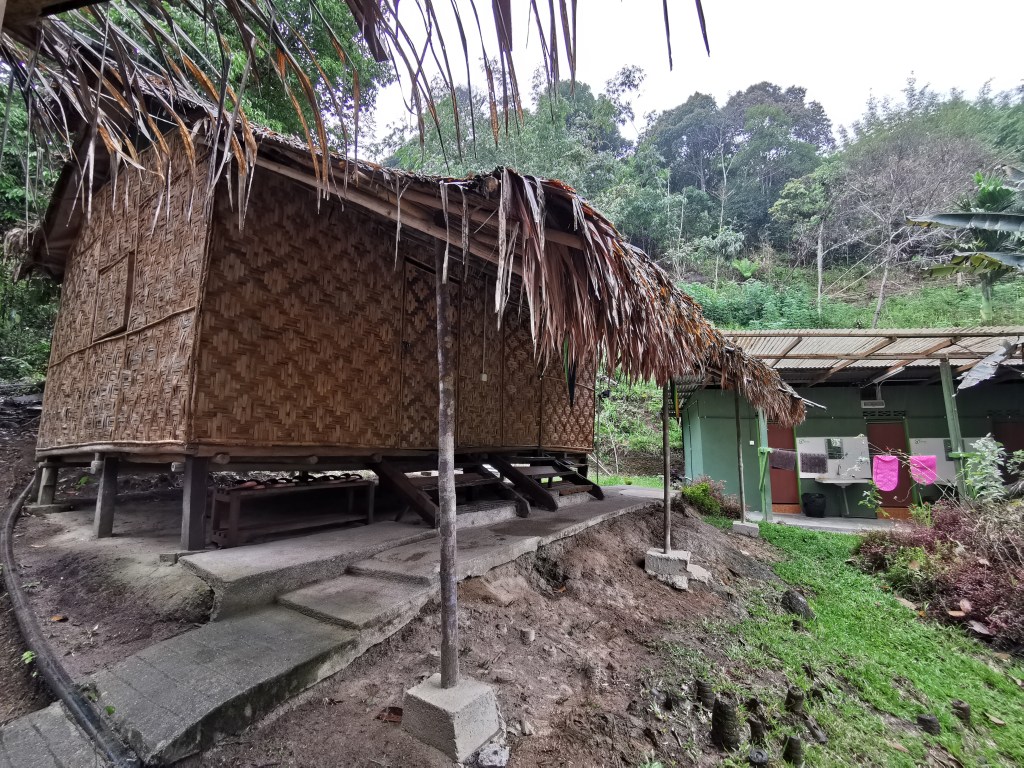
Some months ago I spotted on booking.com a slightly more authentic type of accommodation than the many standard hotels I seemed to be booking. What I’d seen was a traditional style of house for the indigenous people of Malaysia, the Orang Asli and it was in the Cameron Highlands.
The accommodation is called The Rainforest Inn which is a small collection of 4 bamboo huts portioned up into spaces to sleep around 16 to 20 people with 3 blocks of shared bathroom facilities. Whilst we were there the only other guests were one family of 3 adults and one family of 2 adults and 2 children so, other than the sound of the waterfall, it was very quiet and peaceful, exactly what we wanted.
Driving into the hills of the Cameron Highlands along a winding road through dense rainforest, we would turn corners and get just the briefest glimpse of a vista letting us know how high we were climbing and it gave me a sense of getting away from it all.
I’d been in touch with our host, Gee for weeks ahead of our visit using WhatsApp and email and had arranged to meet him at a petrol station in Ringlet but hadn’t given a firm time of arrival. We didn’t have the exact address of the accommodation as Gee wants to keep it special and away from general public. As your phone loses all signal for a good hour as you climb you have to just go with it, sit back and relax. I went with it by putting my air pods in and listening to Spotify. Low and behold what should come on but Guns N Roses, Welcome to the Jungle 🙂
The only things you see on the climb are occasional roadside stalls selling sticky beans (I found this out later as I asked what the green, finger like things were when I found them in the rainforest) and lots of stray dogs. As we drew nearer to Ringlet in the Cameron Highlands, we saw some stalls selling beautiful bamboo and wicker items like baskets and furniture.
The area is well known for large tea plantations but the thing that struck me first when we reached Ringlet and the Cameron Highlands is the amount of intensive agriculture that is there. There are plastic covered structures everywhere, used to protect the vegetable and flower crops from rain and sun damage and this has sadly replaced much of the natural beauty.


There’s a complex problem here with heavy soil erosion due to the steeply inclined hill sides having now been stripped of natural vegetation and instead used for crops such as vegetables, tea and flowers. The soil loses much of its nutrients in the run off and this is then artificially replaced by an overuse of agri chemicals and fertilisers by farmers. The soil erosion also creates sediment in water courses affecting quality and the hydro power capability of the nearby dam amongst many other things. These environmental issues are issues the world over. In the UK we have green rolling hills of grass, crops and fields filled with farmed animals where once there was natural woodlands. Here rainforest is replaced with palm, tea and any other crop humans might want or not need. Can you tell that I type this as we travel trough hundreds of miles of palm oil plantations?…..
Anyhow, back to the rainforest 🙂
So we arrived in Ringlet, my phone pinged back to life, my message delivered and 10 minutes later Gee pulled up on his vespa with instructions to follow him part of the way then to carry on until we saw a particular road sign. There we were to pull over, his staff would find us and lead us into the forest to the settlement which was about 20 minutes away.
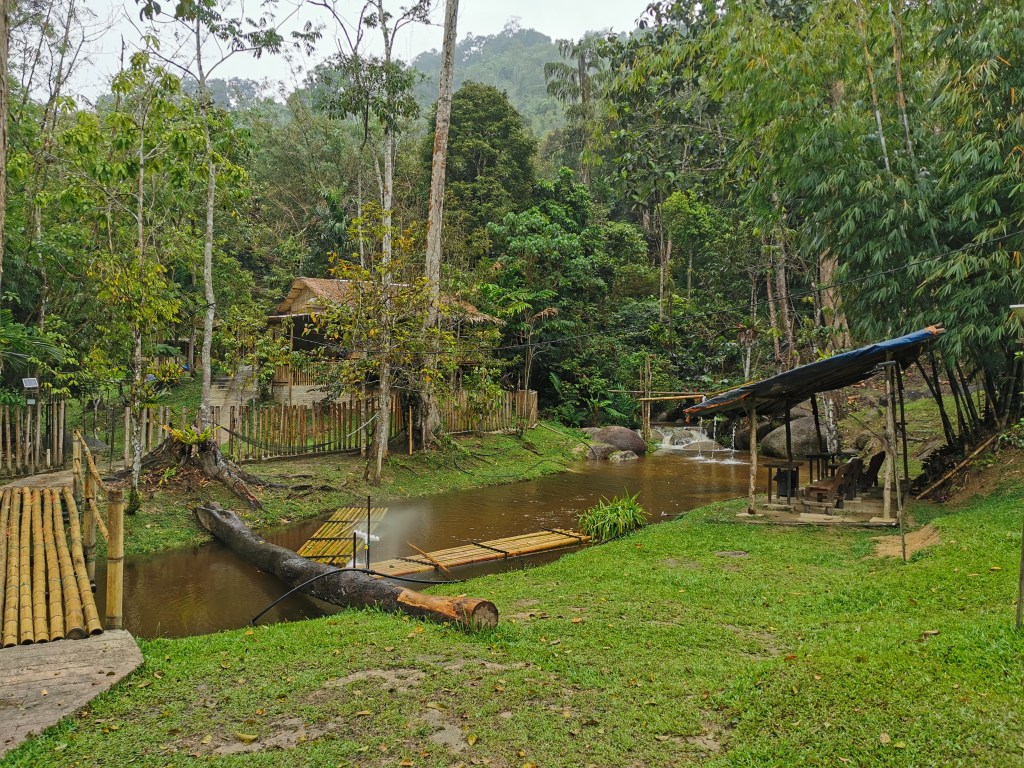
We were shown to our hut, given a pot of tea, told we could play on the rafts and the waterfall in the stream and left to our own devices.

Inside the hut it was light and airy and yes, bugs could get in but we didn’t find anything other than a few ants in ours. Another family we met there did have a large spider on their mosquito net…. 😮 Given the size of the spiders we saw in the jungle I wouldn’t have been too happy with that but it is part and parcel of the experience 🙂
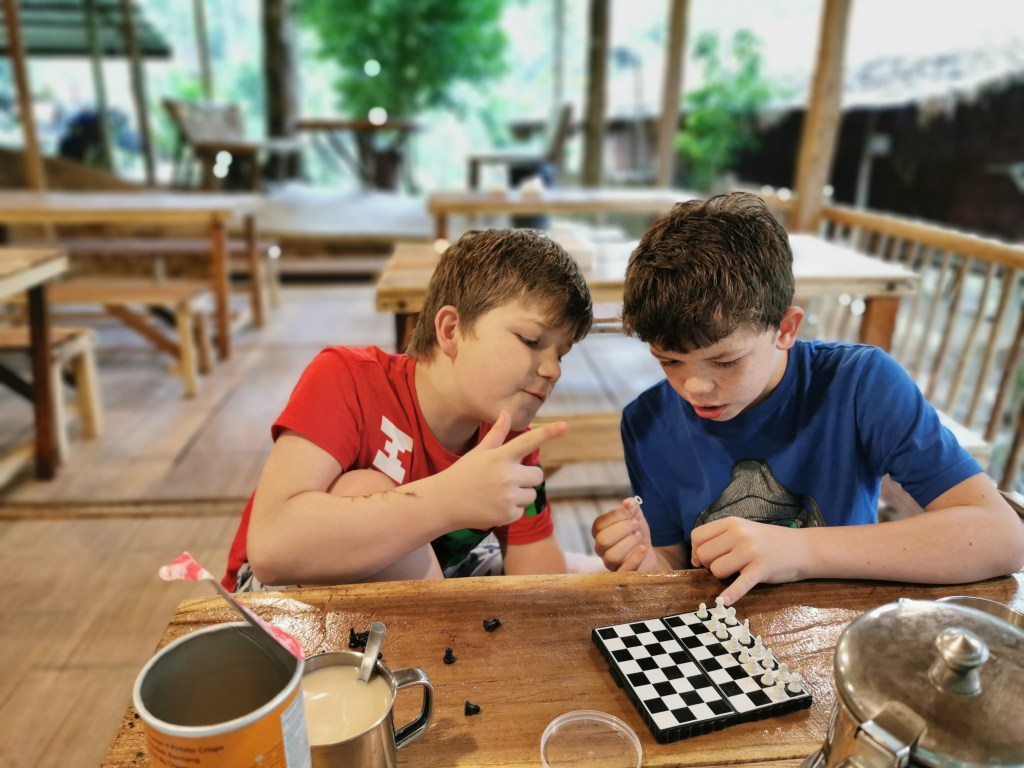
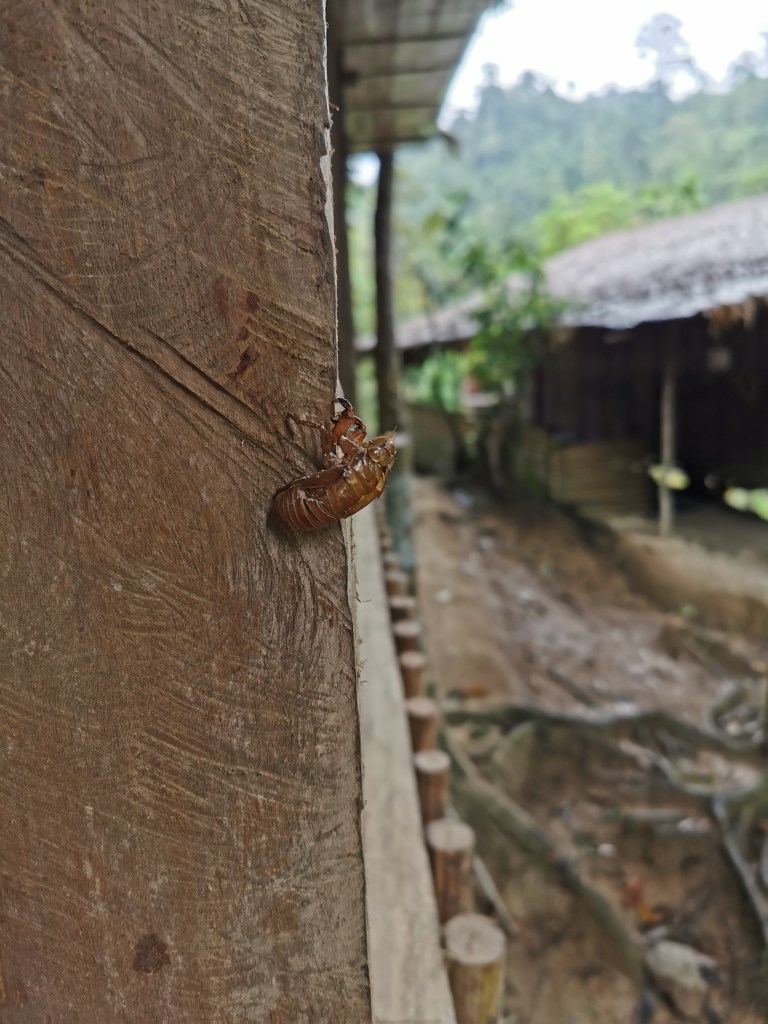
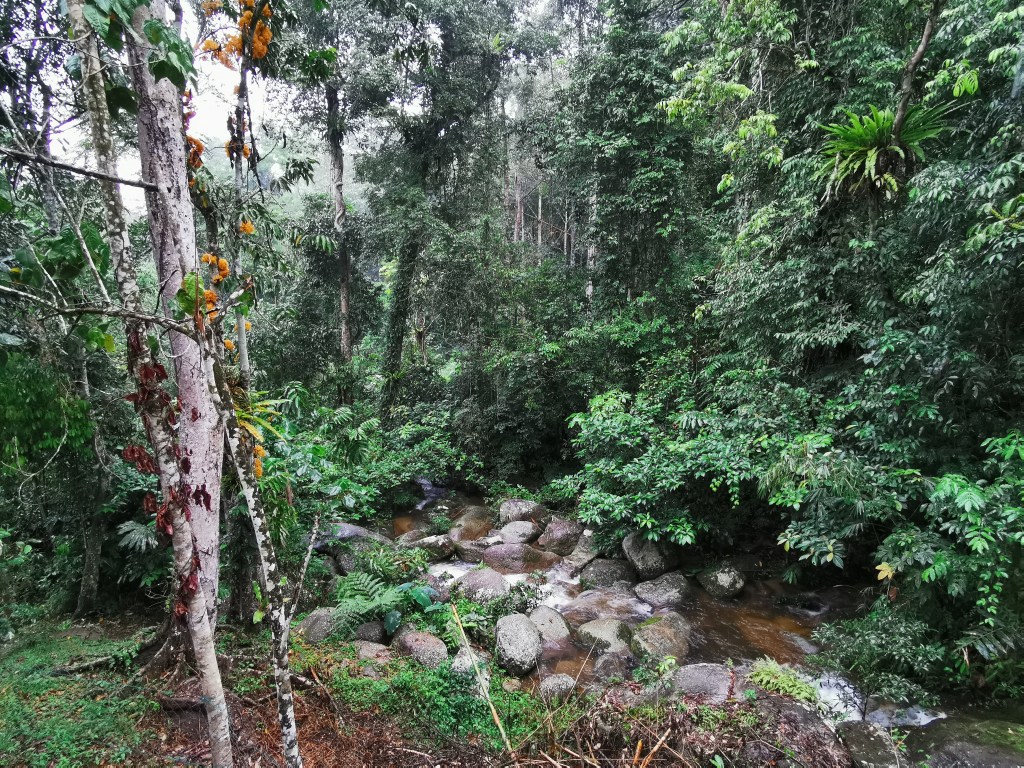
We were meant to just be staying for 1 night but within an hour of arriving we knew that wouldn’t be enough and arranged to stay an extra night.
I’d planned for us to have a meal of traditional dishes cooked on site and we were invited to go and watch the ladies preparing and cooking the food. I’m sorry that I didn’t take more photos of our time here and some of our experiences as I left my phone in our room a lot.
We had BBQ sweet potato, fish, chicken, rice, sweet and sour egg, papaya and a number of other dishes that I can’t recall but all were delicious. The boys loved the sticky rice parcels that are wrapped in leaves and cooked before being packed into a bamboo stem to keep warm.
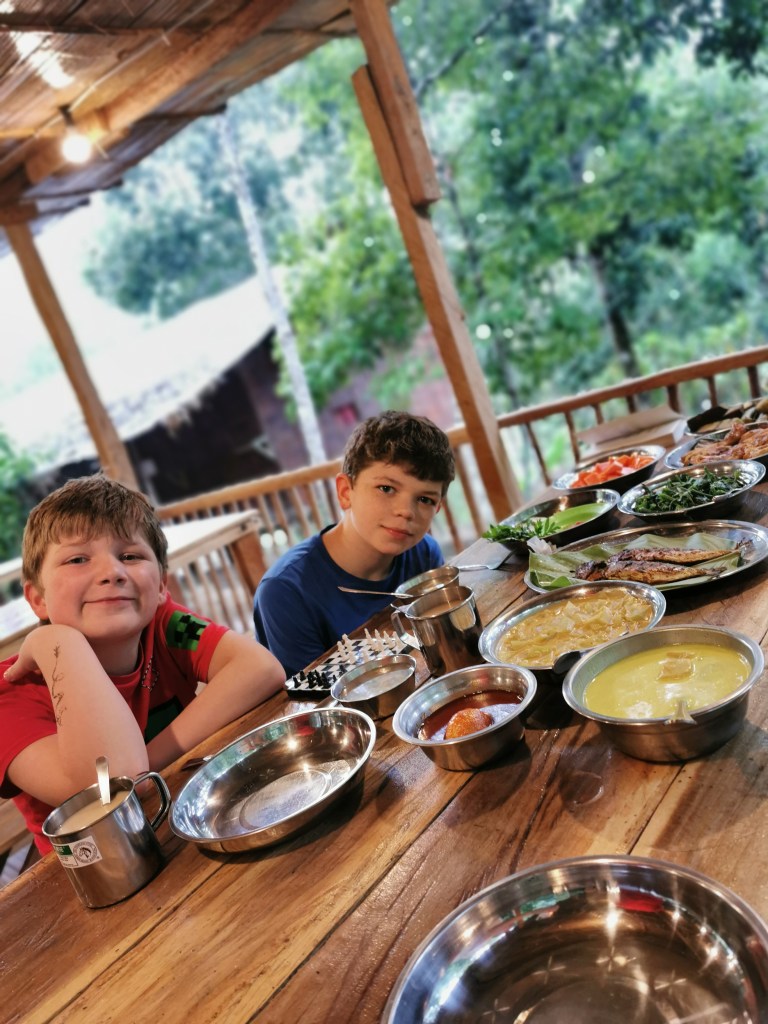
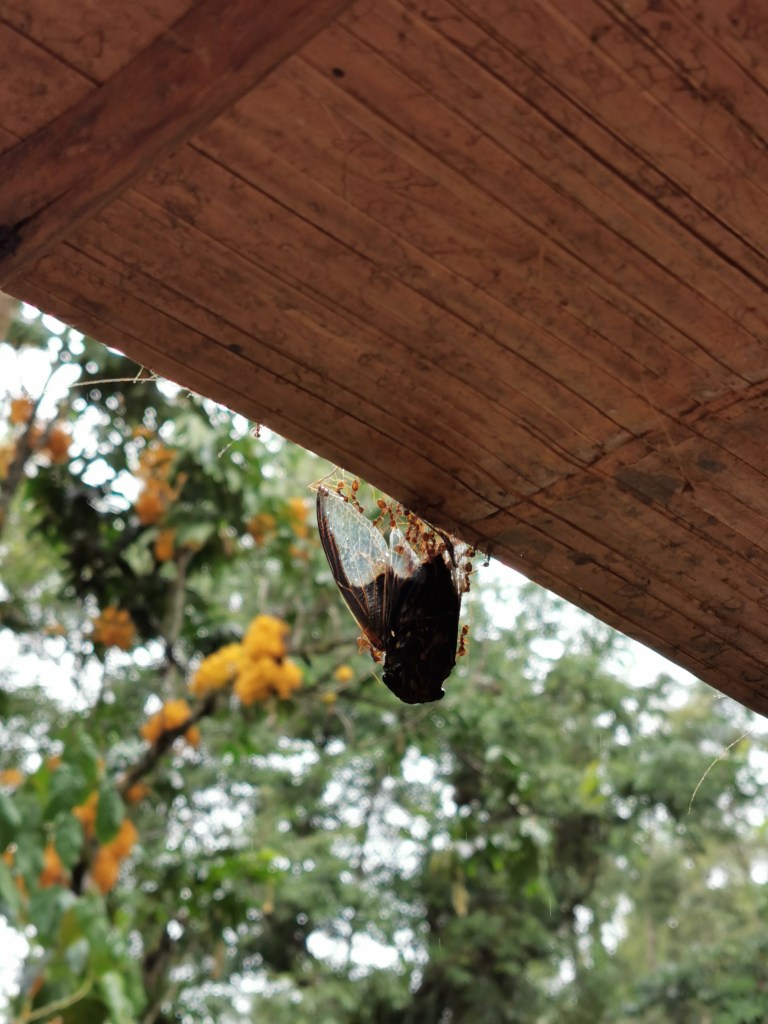
The boys were so excited to sleep under a mosquito net that, after having a chat and sharing some wine with a Swiss/American couple and her mother, we had a very early night or at least early to bed. The boys slept peacefully to the sound of cicadas and the nearby waterfall whereas I, without WiFi or phone signal was unable to keep track of things back at home so enjoyed reminiscing with photos and videos instead.
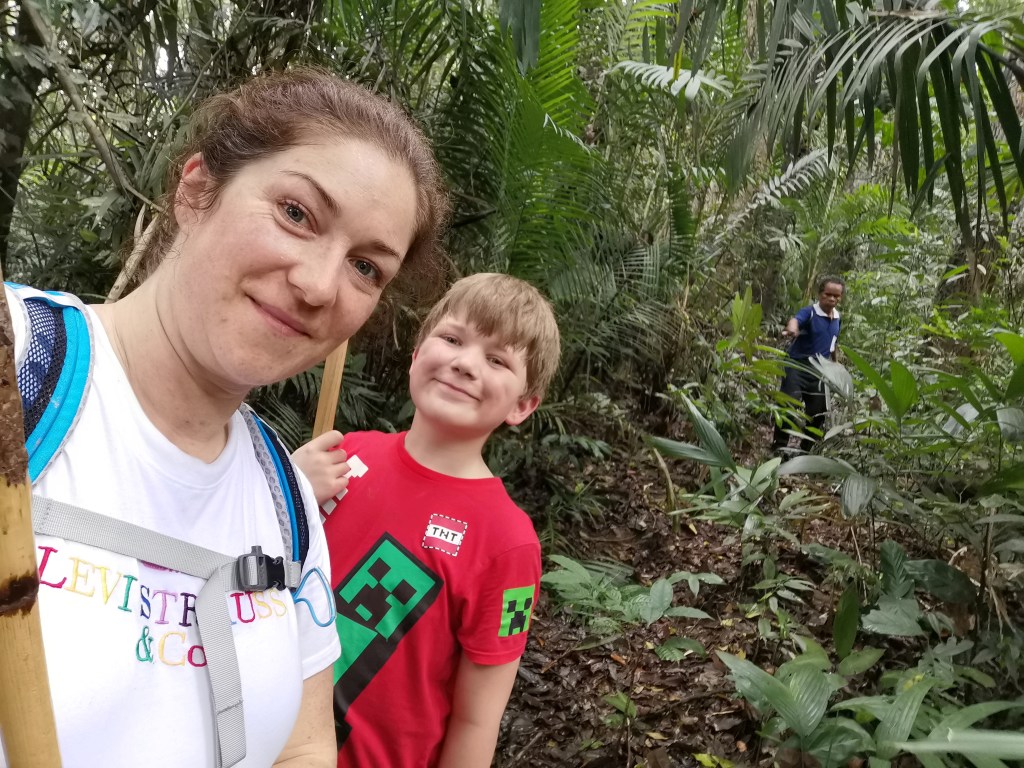
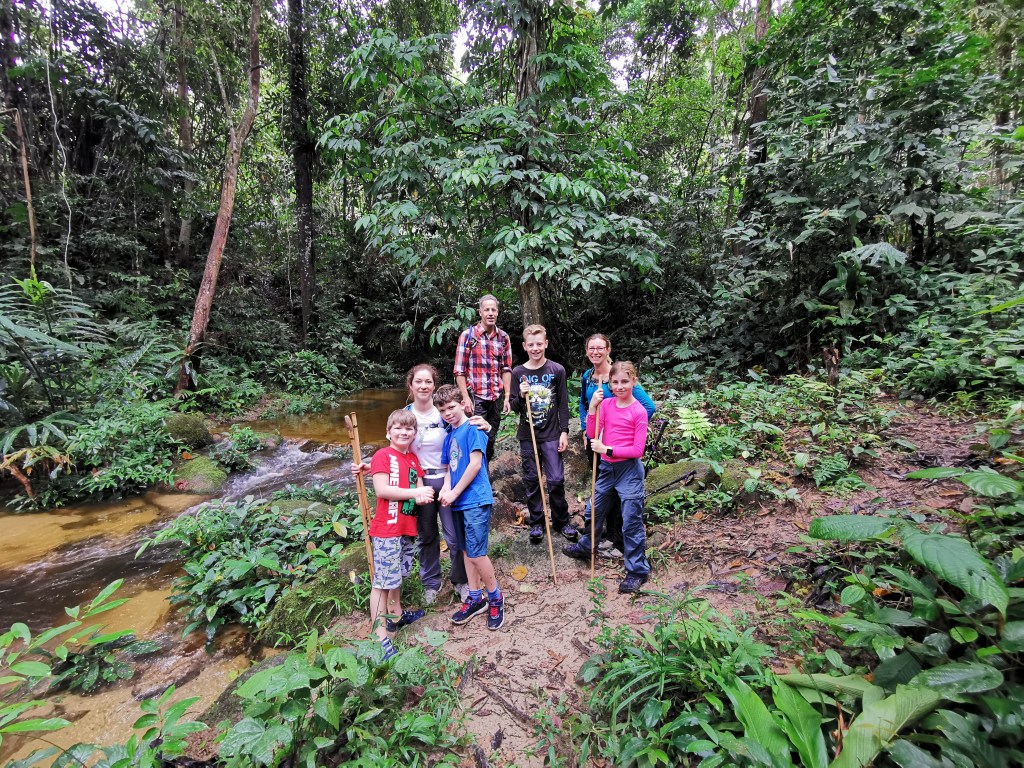
After a breakfast of roti Canai, toast, local strawberry jam and cups of tea we were invited to join a Dutch family (@we_do_live_our_dream) who’d arranged to go on a trek in the rainforest surrounding the camp. I’m so glad that we did as it was a highlight although we rapidly realised that it was to be no walk in the park!

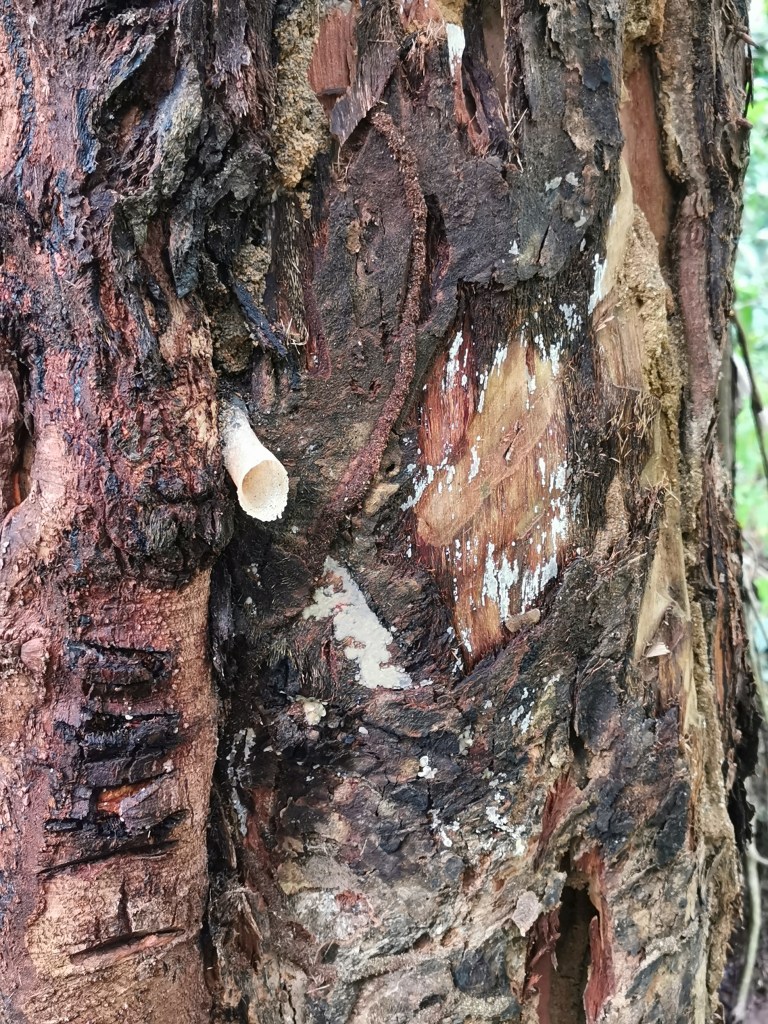
This little tube is the entrance to a bee hive within a tree
With our wooden staff in hand we hiked, sweated, stumbled and slipped our way through dense rainforest for 5 hours whilst our father and son guides silently and nimbly navigated their way along familiar routes, sometimes leaving markings on the trees for others from their village who regularly hunt, trap and forage in these forests.
We were shown plants that are used for salad, for soap and some for smoking to keep mozzies at bay.
We saw spiders the size of my hand that catch bats and small birds in their huge webs.
The guides carried with them just a machete and a simple wicker backpack that contained water for boiling and our lunch of pot noodles. When we stopped for lunch they made a fire with bamboo, and also set about cutting it in a number of different ways depending on what it was to be used for. Some was as a smoking torch to keep mozzies at bay, larger green stems were cut and the water was poured into it before placing it into the fire to heat up. The father cut down huge bamboo stems that contained fresh water and each of us were given our own to drink. When the water in the bamboo stem in the fire had boiled we made and enjoyed our pot noodles.
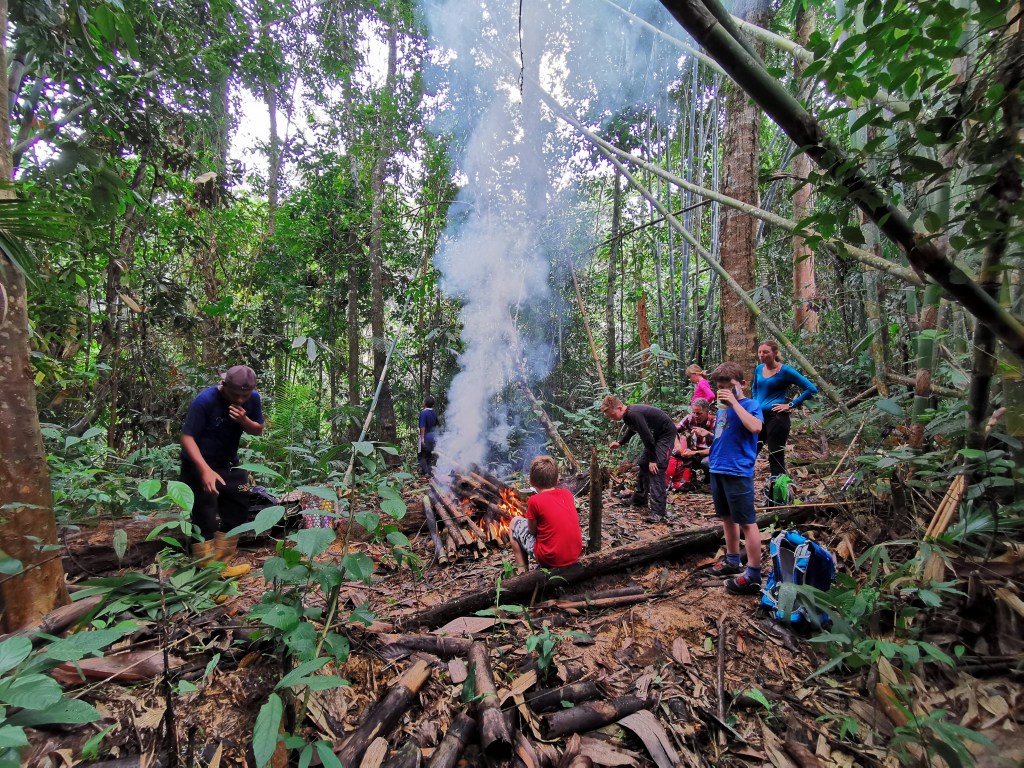
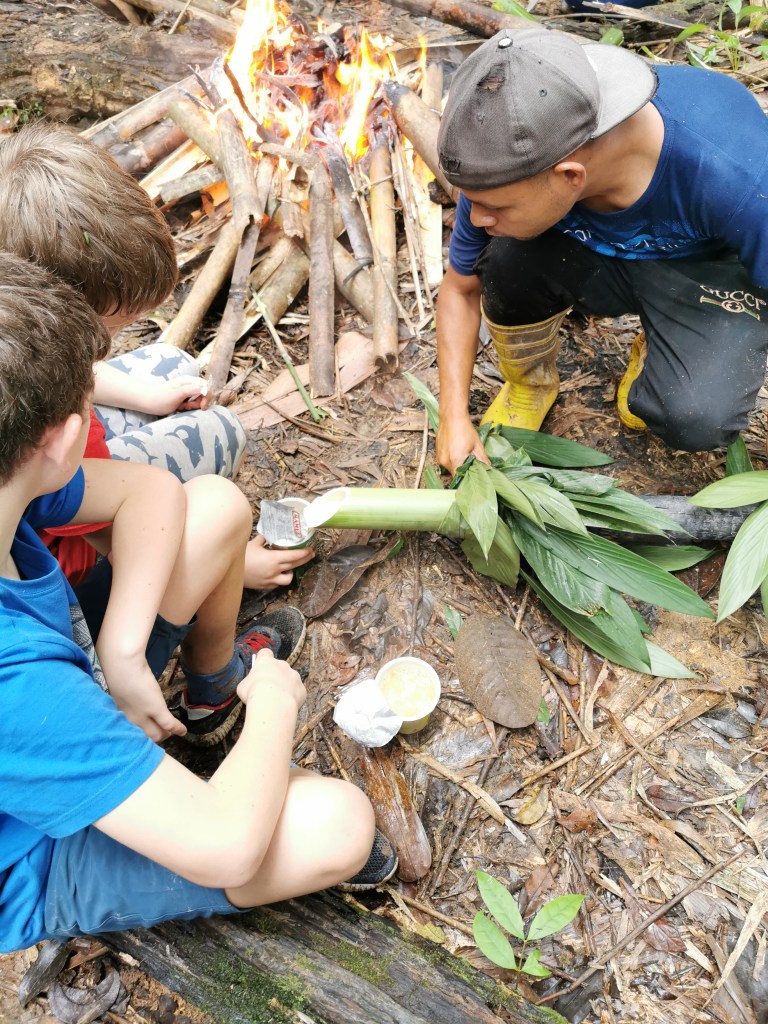
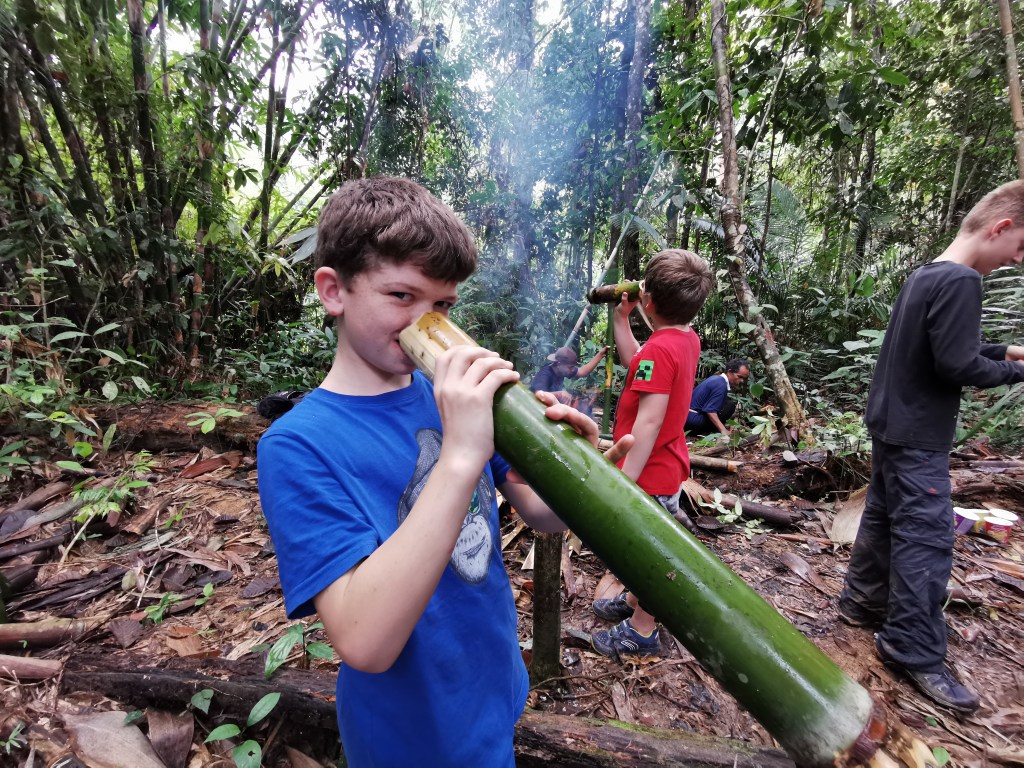
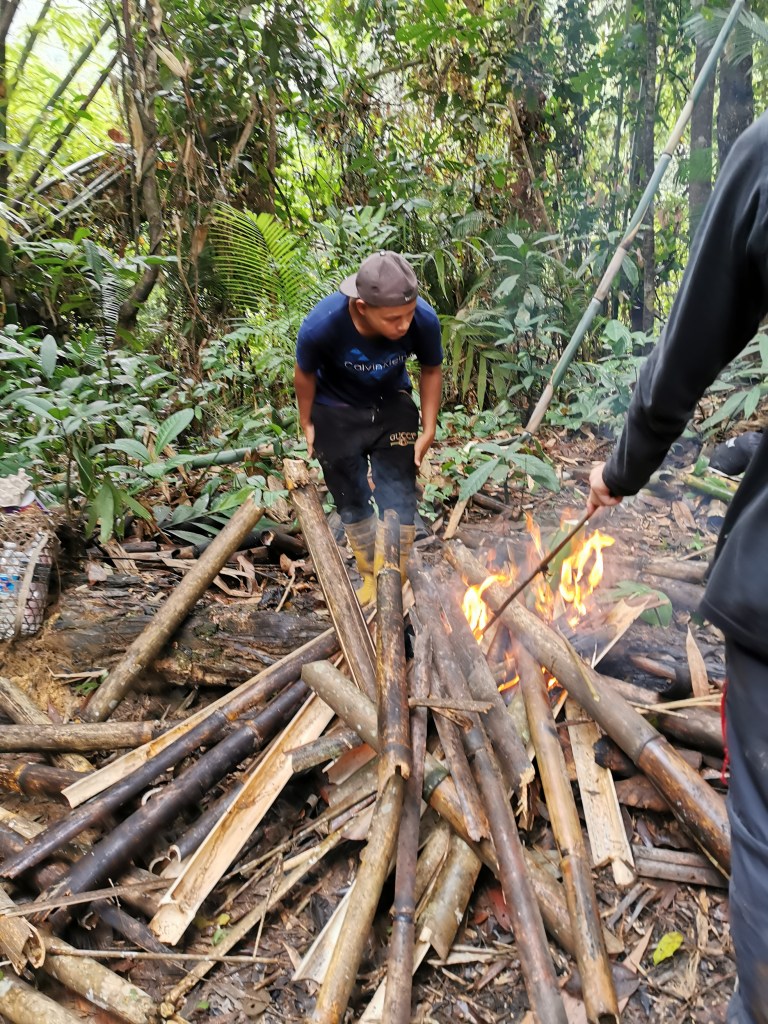
Oddly enough, because we were so high up we also got 4G signal on our mobiles so I was able to send a live video of this to family back at home who were just waking up!
As we walked out of the jungle and into the village that is alongside the camp we were surrounded by so many beautiful butterflies that gathered on the track and its verges and danced and flittered around us as we passed.
On our return to camp we went for a swim in the stream and a paddle on the rafts before being shown how the Orang Asli use blow pipes and traps for hunting.

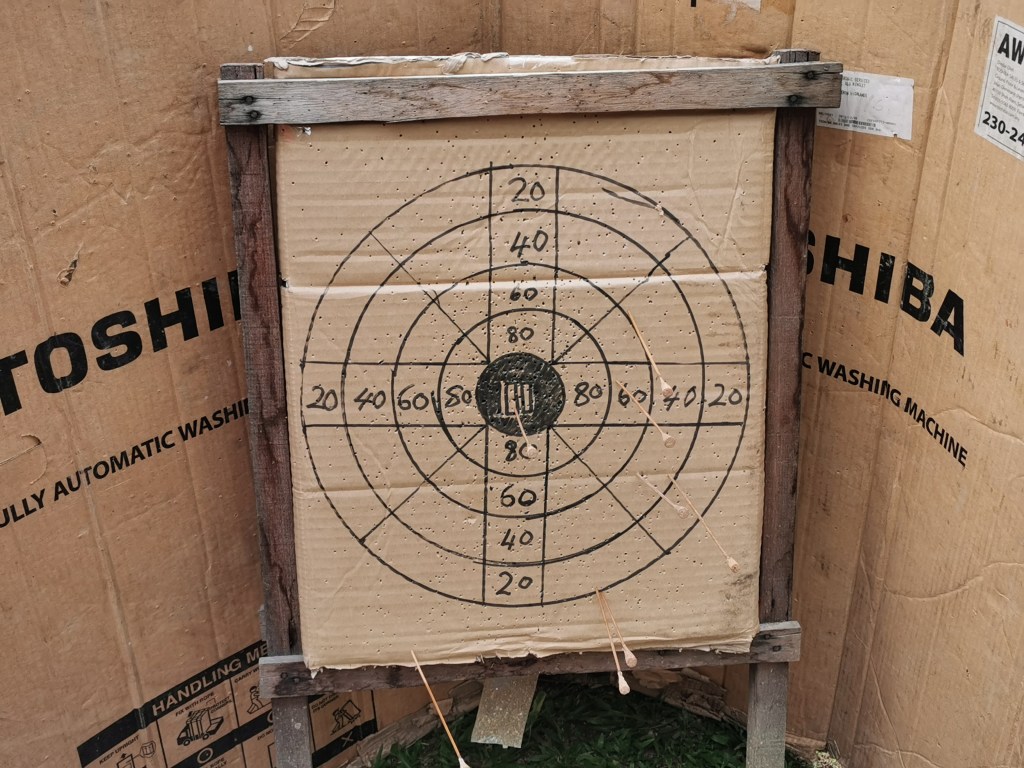
Mama got a blow pipe bulls eye! 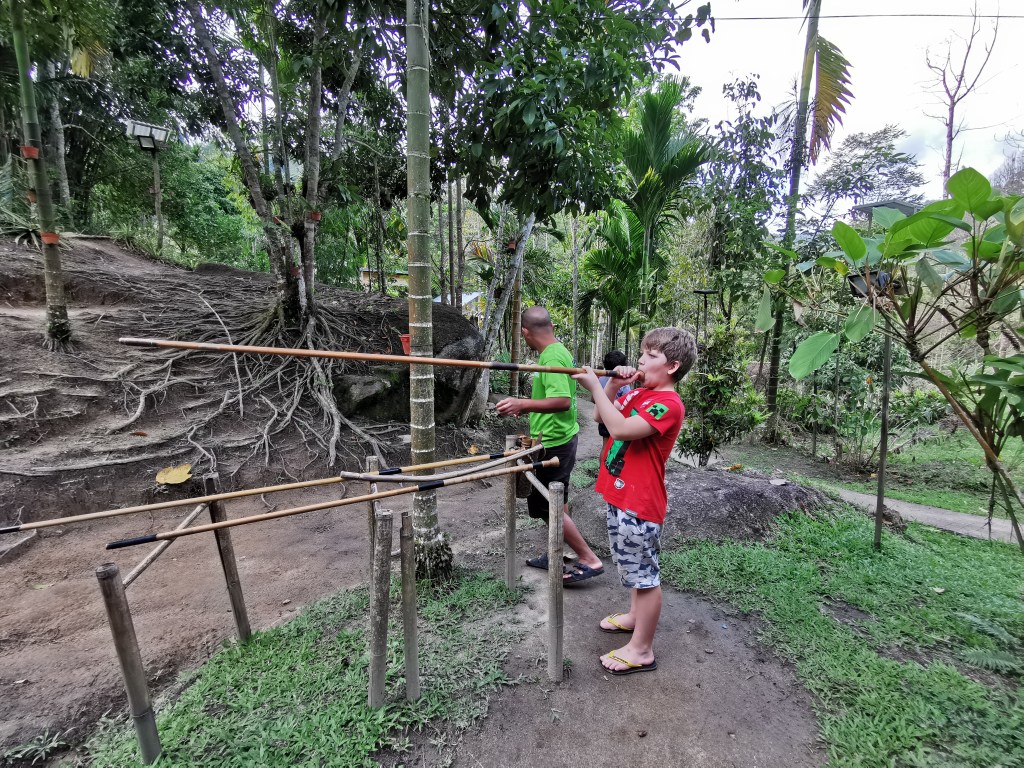
After dinner we were invited to join the Dutch family for volleyball and card games which we did. It was lovely to converse with adults again and to hear about other people’s journeys and plans. They too are home schooling whilst they travel for a year and work remotely.
I also sat and watched the father who had been one of our earlier guides, use his huge machete to delicately peel the thin skin from an edible bean pod we’d picked up in the forest. This same blade had been used to cut down 6 inch thick bamboo stems and clear paths of fallen trees and logs on our trek but now was a delicate pairing knife. I love that. His son explained to us that his parents had lived in forest dwellings until relatively recently when the government had put schemes in place to bring people out of the forest and into these villages. His mum still wasn’t used to it and prefers their old way of life.
A traditional Malay house is built on stilts for 5 reasons;
- To prevent animals such as snakes entering the property.
- To raise the house above the flow of water when it rains heavily which it often does here.
- Having a house on stilts means that you can build it on uneven ground such as a hillside and still have level floors.
- To allow air circulation as it obviously gets very hot and humid here.
- So that the property can be carried and moved to another site if necessary.
They are made of light materials, primarily bamboo, one of the reasons for this is so that poles can be slid under the structure and men can lift it and move it when needed.
Bamboo is used for so many things here. We saw that it can be used to store and carry things inside the hollow stems including parcels of cooked rice, for building materials, fire wood, tools, traps, cooking and steaming water to name a few. I’ve no doubt that the list goes on and on as we were only there for 48 hours.
We loved our time here and when it came time to leave we were sorry to go. It turned out to be in such stark contrast to where we headed next I almost did return the following night!
 Milo and her boys
I so love your posts Milly, what an amazing adventure you are all having! Can’t wait to hear about what Milo and her boys are doing next! xxxx♥️xxxx
LikeLike
Another lovely post darling, so happy that you’re making so many lifelong memories. Love you. Xxx
LikeLike